
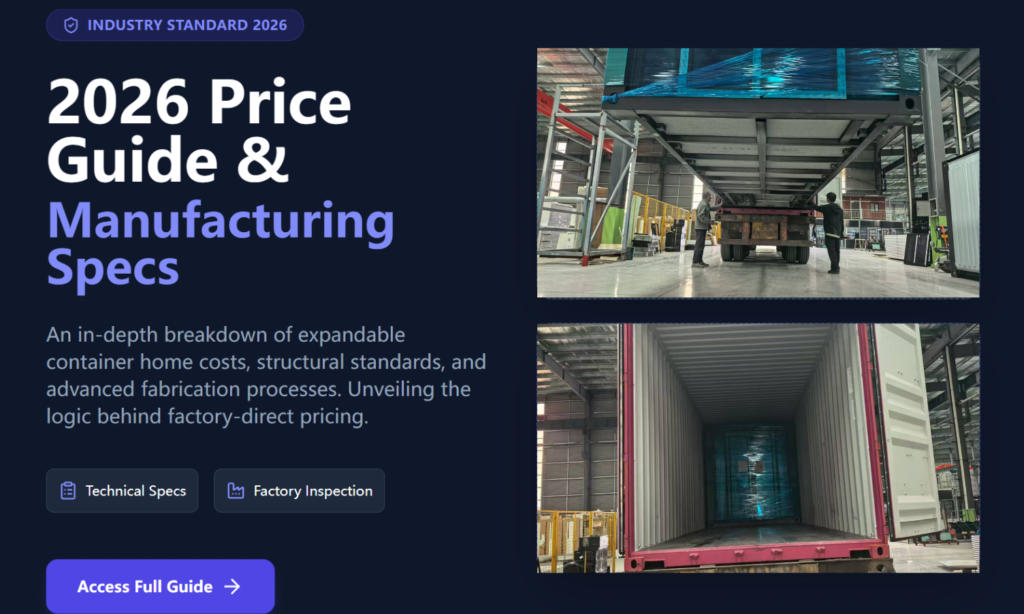
If you are a land developer, a regional distributor, or an NGO procurement officer planning a project in 2026, accurate budget estimation is your critical first step. The demand for modular living solutions has skyrocketed across the US, Canada, and Australia. Naturally, finding a reliable expandable container home price list 2026 is at the top of your to-do list.
However, as a professional manufacturer, Casabox Container House wants to share an industry truth: Publishing a fixed, one-size-fits-all price list online often misleads B2B buyers. The actual wholesale expandable house cost per unit depends heavily on your local building codes, structural upgrades, and order volume.
In this comprehensive guide, we break down exactly how pricing is calculated, the premium engineering materials we use, and why partnering directly with a factory guarantees both quality and cost-efficiency.
1. Volume Matters: Bulk vs. Single Unit Pricing
For B2B buyers and developers, economies of scale dictate the final project cost.
- Single Unit (Sample or Retail): Purchasing a single unit typically incurs a higher per-unit cost. This covers individualized manufacturing setup, standard LCL (Less than Container Load) shipping, and baseline materials.
- Bulk/Wholesale Orders: Are you looking for 20ft expandable house bulk pricing for developers? When you order in volume (e.g., 5, 10, or 50+ units), the cost drops significantly. A standard 40ft High Cube (HC) shipping container can transport multiple folded 20ft expandable houses. This maximizes ocean freight efficiency and drastically reduces your landed cost per unit.
2. The True Cost Drivers: What Are You Paying For?
Instead of chasing the cheapest (and often lowest quality) quotes on the market, successful distributors understand the value of robust engineering. At Casabox, our pricing reflects the high-grade materials and compliance standards necessary for global deployment.
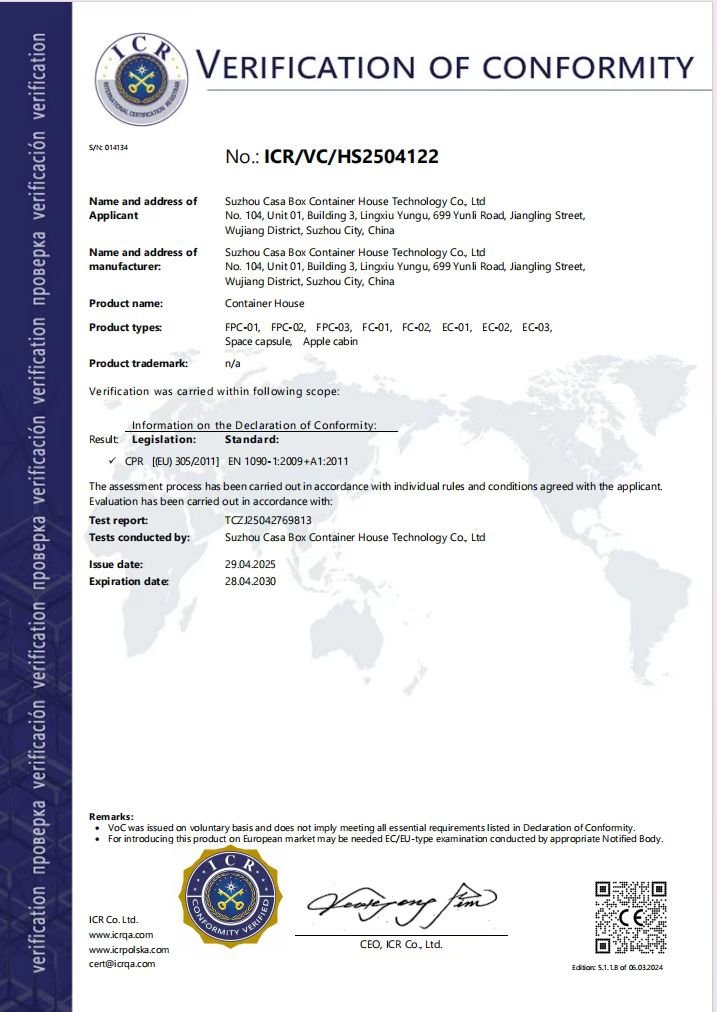
A. The Skeleton: High-Yield Galvanized Steel The structural integrity of an expandable home relies on its frame and folding hinges. We do not cut corners here.
- Material: We utilize high-strength Q235B or Q345B galvanized square tubes and steel profiles.
- Advantage: The heavy-duty galvanization process provides a protective zinc coating that prevents oxidation and rust, ensuring a structural lifespan of 20 to 30 years. Precision laser-cut hinges guarantee the house can be folded and unfolded multiple times without compromising stability.
B. The Protective Shell: Insulation and Fire Ratings A house destined for a Canadian winter requires vastly different thermal properties than one heading to the Australian Outback.
- Standard Options: 50mm or 75mm EPS (Expanded Polystyrene) sandwich panels.
- Premium Upgrades: PU (Polyurethane) or Rock Wool panels. These provide Class A fire resistance and superior thermal/acoustic insulation, lowering HVAC energy costs and meeting strict North American and Oceanian building codes.
C. Global Compliance and Electrical Standards The electrical wiring, plumbing, and sanitary wares must meet the standards of your destination country. Upgrading to UL (for the US), CSA (for Canada), or AS/NZS (for Australia) certified electrical components will slightly adjust the base price but guarantee smooth permit approvals upon arrival.
D. Structural Resilience: Wind and Earthquake Ratings. Our premium expandable models are engineered to withstand severe weather. With reinforced steel structures and proper foundation anchoring, they offer wind resistance up to Level 11 (approx. 110 km/h) and earthquake resistance up to Grade 8-10. This level of safety engineering is a crucial factor in the final quotation.
3. Why Choose Casabox? Factory Direct Quality & Timely Service
When you search for the wholesale expandable house cost per unit, you aren’t just buying steel and panels; you are investing in a supply chain partner. As a direct manufacturer, Casabox offers advantages that trading companies cannot match:
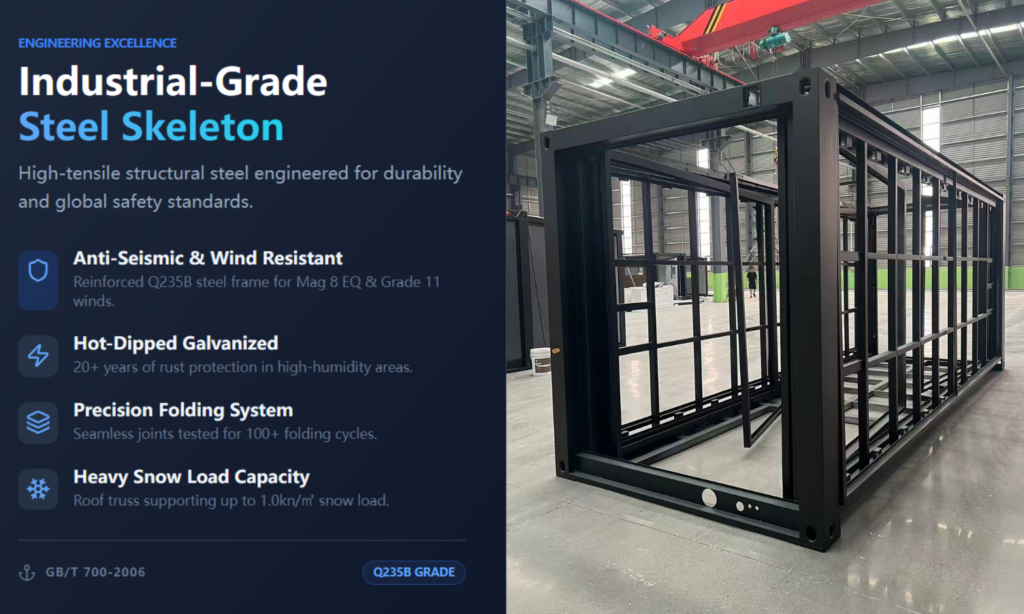
- Strict Quality Control (QC): Over 90% of the house components are prefabricated in our state-of-the-art factory. From visual inspections of welding joints to functional testing of electrical circuits, we maintain a 100% inspection rate before shipment.
- Zero Middleman Markup: By cutting out third-party trading companies, we pass the profit margins directly to our regional distributors and developers.
- Comprehensive After-Sales & Timely Service: We don’t just ship the containers and disappear. Casabox provides robust after-sales support, including detailed remote installation guidance, 3D assembly videos, and prompt responses to any technical queries. Our dedicated B2B team ensures you are never left in the dark.
- Custom B2B Solutions: Need a specific floor layout, custom PVC cladding, or upgraded double-glazed aluminum windows? Our engineering team works with you to tailor the product to your exact market needs.
Request Your Custom B2B Pricing Matrix
Because material costs, exchange rates, and freight fees fluctuate, and because your project configurations are unique, we protect our clients’ competitive advantage by not publishing static prices online.
Stop guessing with outdated prices. Let our factory calculate the exact numbers for your 2026 project.
Whether you need a single prototype to test your local market or a comprehensive quotation for a 100-unit camp development, our sales engineers are ready to provide a confidential, tailored pricing matrix.
Contact us directly for a fast, accurate quote:
- WhatsApp: +86 183 6222 7757
- Email: Shary@casaboxcontainerhouse.com
Our team typically responds within 12 hours with structural recommendations and accurate FOB/CIF estimates.
